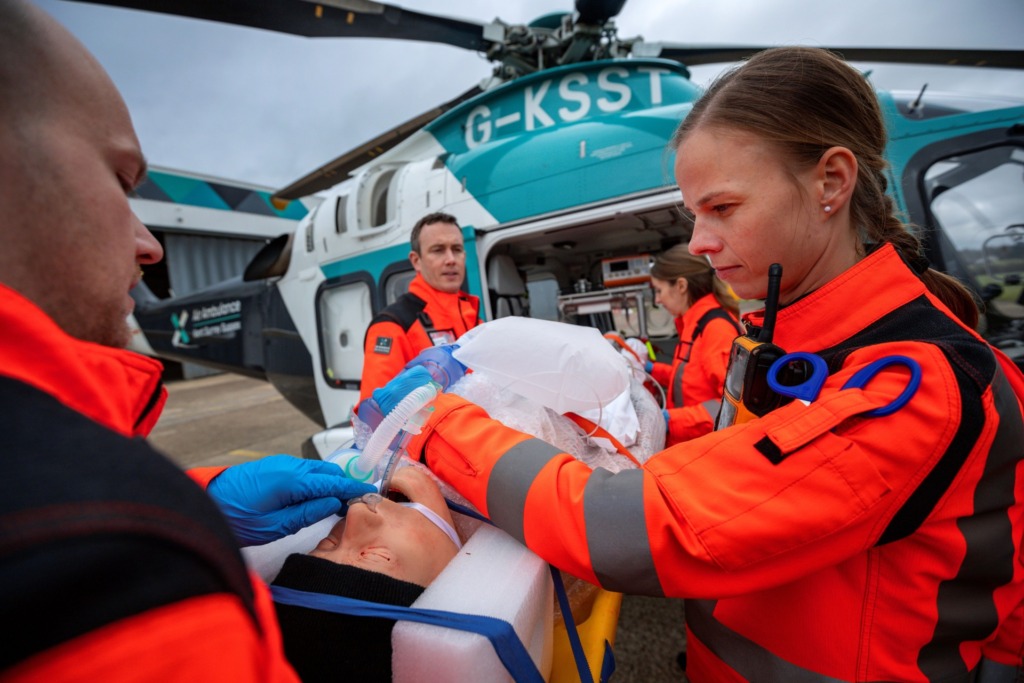
A new study led by the Pre Hospital Trainee Operated Research Network (PHOTON) in collaboration with KSS published in the Scandinavian Journal of Trauma, Resuscitation and Emergency Medicine has revealed significant variation in calcium levels among trauma patients receiving pre-hospital blood transfusions — highlighting a critical opportunity to provide more tailored care for our patients.
The study, conducted across five UK air ambulance services, found that fewer than half of trauma patients had normal calcium levels upon arrival at hospital. Both low (hypocalcaemia) and high (hypercalcaemia) calcium levels were common and associated with poorer outcomes, yet current pre-hospital protocols often rely on fixed-dose calcium replacement without real-time monitoring.
It paves the way for future work to explore how calcium levels in pre-hospital patients are managed at the scene or during their transfer to hospital.
Key Findings:
- 43% of patients were hypocalcaemic and 22% hypercalcaemic on arriving at hospital.
- Only 35% had normal calcium levels despite receiving calcium replacement.
- Patients who received more blood products were more likely to have abnormal calcium levels.
- There was wide variation in calcium dosing and timing across services.
- Pre-hospital point-of-care testing (POCT) for ionised calcium (iCa) was not used by any participating service at the time of the study.
Implications for Patient Care:
The research underscores the urgent need for precision trauma care in the pre-hospital setting. By introducing POCT for calcium levels on board air ambulances, clinicians could tailor calcium replacement to each patient’s needs—potentially reducing the risk of complications such as cardiac dysfunction, coagulopathy, and increased mortality.
Commenting on the research, Dr Chris Simpson of our Research and Innovation Team said: “This collaborative study across five air ambulances adds important evidence to the field of blood transfusion research. We found that major trauma patients receiving pre-hospital blood product transfusions showed a wide range of ionised calcium levels when measured in hospital, suggesting that existing standard operating procedures may not be adequate.
“Our findings make way for future work to explore whether empiric pre-hospital calcium supplementation or targeted calcium replacement is more appropriate for these patients. Targeted calcium replacement could potentially be supported by point-of-care devices in the pre-hospital setting, allowing us to treat patients according to their actual calcium measurements either at the scene or during transfer to hospital.”
The study demonstrates the feasibility of collecting detailed pre- and in-hospital data across multiple air ambulance services. It paves the way for future research and the development of evidence-based guidelines for calcium management in trauma care. Air ambulance services such as KSS continue to explore the integration of POCT devices into their clinical workflows, particularly for longer missions where early intervention can make a lifesaving difference.
About the Study:
The research was conducted by the Pre-Hospital Trainee Operated Research Network (PHOTON) in collaboration with KSS, The Air Ambulance Service, Essex & Herts Air Ambulance, Lincs & Notts Air Ambulance, and Hampshire & Isle of Wight Air Ambulance. It evaluated 58 trauma patients who received pre-hospital blood transfusions between February and April 2024.