
Finding your pathway to clinical practice and HEMS in the UK
This resource has been developed for doctors and paramedics with a particular interest in progressing towards Pre-Hospital Emergency Medicine (PHEM) and Helicopter Emergency Medical Services (HEMS) within the UK.
The guidance on this page is shaped by the lived experiences of clinicians who have successfully navigated and secured roles within PHEM/HEMS at Air Ambulance Charity Kent Surrey Sussex (KSS). It is intended as a practical guide only, offering insights, tips, and reflections to support you as you begin or continue your professional journey through medicine and pre-hospital care. While everyone’s pathway is unique, we hope the shared experiences captured here will inspire and help you better understand the process and prepare for the opportunities ahead.










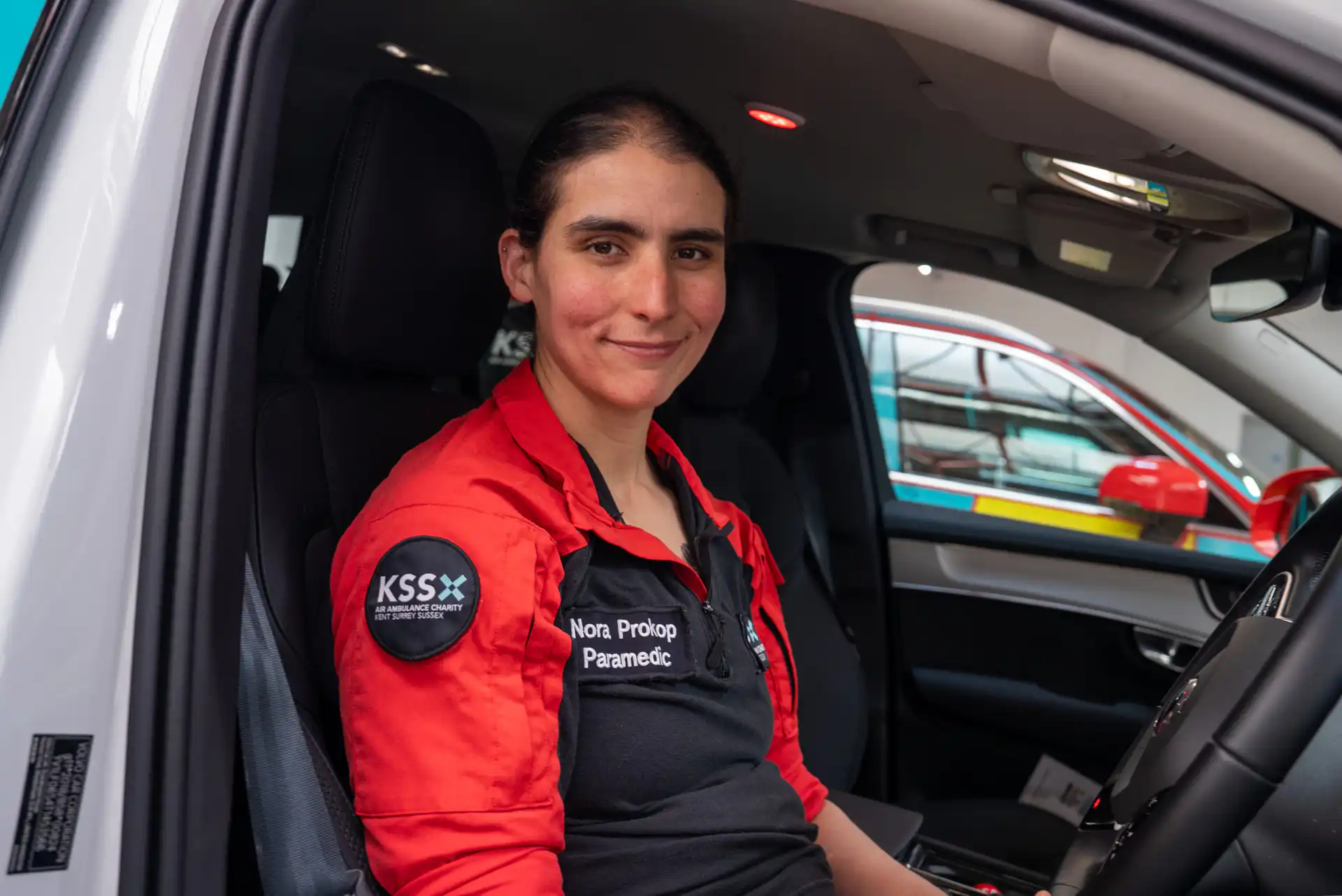
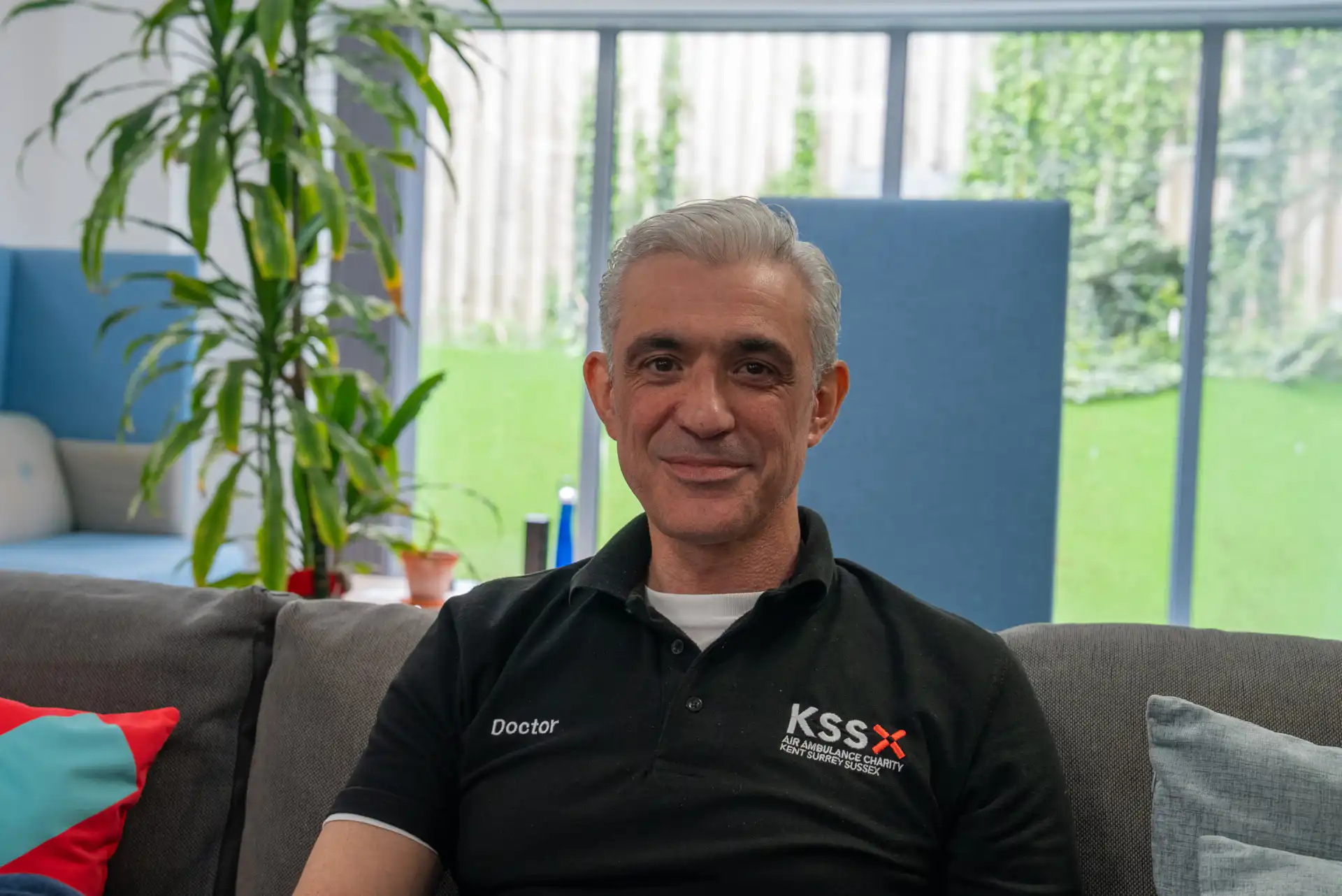
In the UK, there are currently around 410,000 registered doctors with the General Medical Council (GMC) and just under 42,000 registered paramedics with the Health and Care Professionals Council (HCPC). While many doctors work within the hospital care system and paramedics work within frontline ambulance services, only a relatively small percentage develop a specific pre-hospital critical care interest and ultimately may transfer into HEMS positions.
Roadmap to success
Stage 1: Demonstrating language proficiency
What is expected?
Before anything else, you need to show that you can communicate effectively in a clinical environment. This is not just about passing an exam, it’s about proving you can safely interact with patients, relatives, and colleagues.
There are different types of tests available, some feel more intuitive for people who are clinically trained as they reflect real clinical scenarios. Others are more widely available and may be easier to access depending on your location.
Both the GMC and the HCPC require specific scores, and timing is important: your results must still be valid when you apply.
Principles
Clear communication underpins patient safety, clinical effectiveness, and public trust. Demonstrating English proficiency is the first mandatory step before entering any UK healthcare register.
In summary
- Choose one of the recognised English tests
- Prepare according to test format (clinical vs general English)
- Sit the exam
- Achieve required scores
- Ensure results remain valid (2 years)
- Use results within registration timelines (might be less than 2 years if used for professional body registration)
FAQs
What tests are accepted?
Two main tests are accepted:
- Academic International English Language Testing System (IELTS).
- Occupational English Test (OET)
What is IELTS?
IELTS is a general English test used globally for education, employment, and migration. It is designed to test your general English language ability across a broad range of topics. The IELTS was developed and managed by the British Council, IDP Education, and Cambridge Assessment English, and is accepted by employers, visa authorities, and universities.
It assesses:
- Listening (30 mins)
- Reading (60 mins)
- Writing (60 mins)
- Speaking (11–14 mins)
What is OET?
OET is a healthcare-specific English test designed for various professions. It is accepted by organisations such as the GMC, and HCPC. It is designed to assess your English communication skills in medical contexts to ensure you can effectively work in a healthcare environment.
It assesses:
- Listening (45 mins) – Healthcare topics
- Reading (60 mins) – General and medical texts
- Writing (45 mins) – Write a letter (e.g. referral/discharge)
- Speaking (20 mins) – Profession-specific role-play
How do OET and IELTS compare?
Feature | OET | IELTS |
Focus | Healthcare-specific | General and academic English |
Tasks | Clinical scenarios | Every day and academic scenarios |
Recognition | Medical councils | Universities, employers and Immigration authorities |
Ease | Familiar for clinicians | Can be easier for non-medical candidates |
Preparation | Clinical materials | Broad English study |
What scores are required?
Doctors:
- IELTS: 7.5 overall (≥7.0 each section)
- OET: Grade B (≥350)
Health and Care Professionals:
- IELTS: 7.0 overall (≥6.5 each section)
- OET: Grade B (≥350), no section below C (300)
How long are results valid?
- Valid for 2 years
- If used to apply for Professional Body registration, specific requirements of the regulatory body you are applying to may vary slightly
How much do tests cost?
- IELTS: ~£200
- OET: ~£300
How accessible are they?
- IELTS: widely available (140+ countries, frequent dates)
- OET: fewer centres
While formal language testing is a key requirement for registration, it’s important to recognise that using English in a real clinical environment can feel very different, particularly for those for whom English is not a first language.
Accents, regional dialects, fast-paced communication, and the pressure of high-stakes clinical situations can all present additional challenges, even after achieving the required test scores. Many clinicians describe needing time to build confidence in communication, especially in dynamic environments such as HEMS where clarity, speed, and team coordination are essential.
Recognising this as part of the transition, not a personal shortcoming is important. Supportive teams, exposure, and experience all play a significant role in developing confidence and fluency over time.
Helpful links
IELTS for healthcare professionals explained: https://ielts.org/take-a-test/test-types/ielts-academic-test/ielts-online.
OET for healthcare professionals explained: https://www.oet.com.
GMC language skills requirements: https://www.gmc-uk.org/registration-and-licensing/join-our-registers/before-you-apply-guide-for-doctors/evidence-of-your-knowledge-of-english.
HCPC language skills requirements: https://www.hcpc-uk.org/registration/getting-on-the-register/international-applications/documents/certificate-of-english-language-proficiency/
English Language Abilities for Visa applicants: https://www.gov.uk/guidance/prove-your-english-language-abilities-with-a-secure-english-language-test-selt
How to past English proficiency tests: https://www.pastest.com/blogs/news/oet-vs-ielts?srsltid=AfmBOorzsfo5c1PbsdDqgeTiHnULG3atk8EU9FbIzba1FJK7ybF9dqr0
Stage 1: Demonstrating language proficiency
What is expected?
Before anything else, you need to show that you can communicate effectively in a clinical environment. This is not just about passing an exam, it’s about proving you can safely interact with patients, relatives, and colleagues.
There are different types of tests available, some feel more intuitive for people who are clinically trained as they reflect real clinical scenarios. Others are more widely available and may be easier to access depending on your location.
Both the GMC and the HCPC require specific scores, and timing is important: your results must still be valid when you apply.
Principles
Clear communication underpins patient safety, clinical effectiveness, and public trust. Demonstrating English proficiency is the first mandatory step before entering any UK healthcare register.
In summary
- Choose one of the recognised English tests
- Prepare according to test format (clinical vs general English)
- Sit the exam
- Achieve required scores
- Ensure results remain valid (2 years)
- Use results within registration timelines (might be less than 2 years if used for professional body registration)
FAQs
What tests are accepted?
Two main tests are accepted:
- Academic International English Language Testing System (IELTS).
- Occupational English Test (OET)
What is IELTS?
IELTS is a general English test used globally for education, employment, and migration. It is designed to test your general English language ability across a broad range of topics. The IELTS was developed and managed by the British Council, IDP Education, and Cambridge Assessment English, and is accepted by employers, visa authorities, and universities.
It assesses:
- Listening (30 mins)
- Reading (60 mins)
- Writing (60 mins)
- Speaking (11–14 mins)
What is OET?
OET is a healthcare-specific English test designed for various professions. It is accepted by organisations such as the GMC, and HCPC. It is designed to assess your English communication skills in medical contexts to ensure you can effectively work in a healthcare environment.
It assesses:
- Listening (45 mins) – Healthcare topics
- Reading (60 mins) – General and medical texts
- Writing (45 mins) – Write a letter (e.g. referral/discharge)
- Speaking (20 mins) – Profession-specific role-play
How do OET and IELTS compare?
Feature | OET | IELTS |
Focus | Healthcare-specific | General and academic English |
Tasks | Clinical scenarios | Every day and academic scenarios |
Recognition | Medical councils | Universities, employers and Immigration authorities |
Ease | Familiar for clinicians | Can be easier for non-medical candidates |
Preparation | Clinical materials | Broad English study |
What scores are required?
Doctors:
- IELTS: 7.5 overall (≥7.0 each section)
- OET: Grade B (≥350)
Health and Care Professionals:
- IELTS: 7.0 overall (≥6.5 each section)
- OET: Grade B (≥350), no section below C (300)
How long are results valid?
- Valid for 2 years
- If used to apply for Professional Body registration, specific requirements of the regulatory body you are applying to may vary slightly
How much do tests cost?
- IELTS: ~£200
- OET: ~£300
How accessible are they?
- IELTS: widely available (140+ countries, frequent dates)
- OET: fewer centres
While formal language testing is a key requirement for registration, it’s important to recognise that using English in a real clinical environment can feel very different, particularly for those for whom English is not a first language.
Accents, regional dialects, fast-paced communication, and the pressure of high-stakes clinical situations can all present additional challenges, even after achieving the required test scores. Many clinicians describe needing time to build confidence in communication, especially in dynamic environments such as HEMS where clarity, speed, and team coordination are essential.
Recognising this as part of the transition, not a personal shortcoming is important. Supportive teams, exposure, and experience all play a significant role in developing confidence and fluency over time.
Helpful links
IELTS for healthcare professionals explained: https://ielts.org/take-a-test/test-types/ielts-academic-test/ielts-online.
OET for healthcare professionals explained: https://www.oet.com.
GMC language skills requirements: https://www.gmc-uk.org/registration-and-licensing/join-our-registers/before-you-apply-guide-for-doctors/evidence-of-your-knowledge-of-english.
HCPC language skills requirements: https://www.hcpc-uk.org/registration/getting-on-the-register/international-applications/documents/certificate-of-english-language-proficiency/
English Language Abilities for Visa applicants: https://www.gov.uk/guidance/prove-your-english-language-abilities-with-a-secure-english-language-test-selt
How to past English proficiency tests: https://www.pastest.com/blogs/news/oet-vs-ielts?srsltid=AfmBOorzsfo5c1PbsdDqgeTiHnULG3atk8EU9FbIzba1FJK7ybF9dqr0
Stage 2: Gaining professional registration
Lorem ipsum dolor sit amet, consectetur adipiscing elit. Ut elit tellus, luctus nec ullamcorper mattis, pulvinar dapibus leo.
Stage 3: Finding the “right” job, becoming a suitable candidate
Lorem ipsum dolor sit amet, consectetur adipiscing elit. Ut elit tellus, luctus nec ullamcorper mattis, pulvinar dapibus leo.
Stage 4: Right to work: Visa process
Lorem ipsum dolor sit amet, consectetur adipiscing elit. Ut elit tellus, luctus nec ullamcorper mattis, pulvinar dapibus leo.
Item #3
Lorem ipsum dolor sit amet, consectetur adipiscing elit. Ut elit tellus, luctus nec ullamcorper mattis, pulvinar dapibus leo.
Item #3
Lorem ipsum dolor sit amet, consectetur adipiscing elit. Ut elit tellus, luctus nec ullamcorper mattis, pulvinar dapibus leo.
At KSS, there is a team of approximately 80 paramedics and doctors (trainees, fellows and consultants), made up of a mix of secondments from the NHS and direct employees (on a full-time or part-time basis), who work alongside colleagues across the charity to deliver lifesaving treatment and care to those who are critically ill or injured.
We’re committed to a culture of inclusivity, respect, and diversity. We value the unique perspectives and experiences that our clinicians bring and are dedicated to ensuring equitable opportunities for all, regardless of background. We believe that a diverse workforce strengthens both our organisation and the care we provide to patients in our communities.
We recognise that starting the journey towards working in PHEM can feel daunting. Our aim is for this guide to answer common questions, provide clarity, and help ease some of the uncertainties you may face along the way.
We hope this resource proves helpful, and we wish you every success in your journey towards a HEMS career.