My dad got me into motorbikes when I was about 10 years old, so they’ve always been part of my life. In March 2022, I was out enjoying some time on my road bike when I was involved in a collision with a car on a country road in Hampshire.
In a moment, my world was turned upside down. I remember thinking I was in some sort of nightmare that I couldn’t wake up from.
I crushed part of my pelvis on the left side, and my right femur was snapped. Fortunately, I didn’t suffer any head injuries, but I had a broken finger, and later it was discovered that my sciatic nerve had been stretched, which meant I couldn’t move my left foot up and down.
Immediately after the accident, I was in shock. I don’t remember much, but I do remember someone saying they shouldn’t take off my helmet. Then I saw the blades of the helicopter as they loaded me on board to take me to St George’s Hospital in London.
I had to undergo surgery which lasted nine hours, and I nearly died three times. That was a difficult thing to hear, and it still makes me emotional to think about it.
It was a few days later, on the ward after I came out of intensive care, that I started to understand what had happened — and that an air ambulance had come to me and treated me at the scene before taking me to London.
When I learned how bad my injuries were, I wasn’t surprised to hear that KSS had come to me. Then I started thinking that if they hadn’t been able to reach me for any reason, the outcome could have been very different.
Because of my work as a radiographer, I understood the X-ray side of things. So, when I saw the metalwork inside me, my first thought was how amazing it was — what they were able to do.
Then I started panicking about how I was going to stand and walk with all that inside me. I was worried about how I was going to get back to how I used to be — or whether I ever could. Thankfully, I was only in hospital for three weeks.
When I was discharged, I had to move back in with my parents at first, as they live in a bungalow. I was so lucky to have the support of my family, friends, and work colleagues.
Once I was home, there was lots of physiotherapy, including weekly trips to St George’s and a lot of work at home. I was wheelchair-bound for two months.
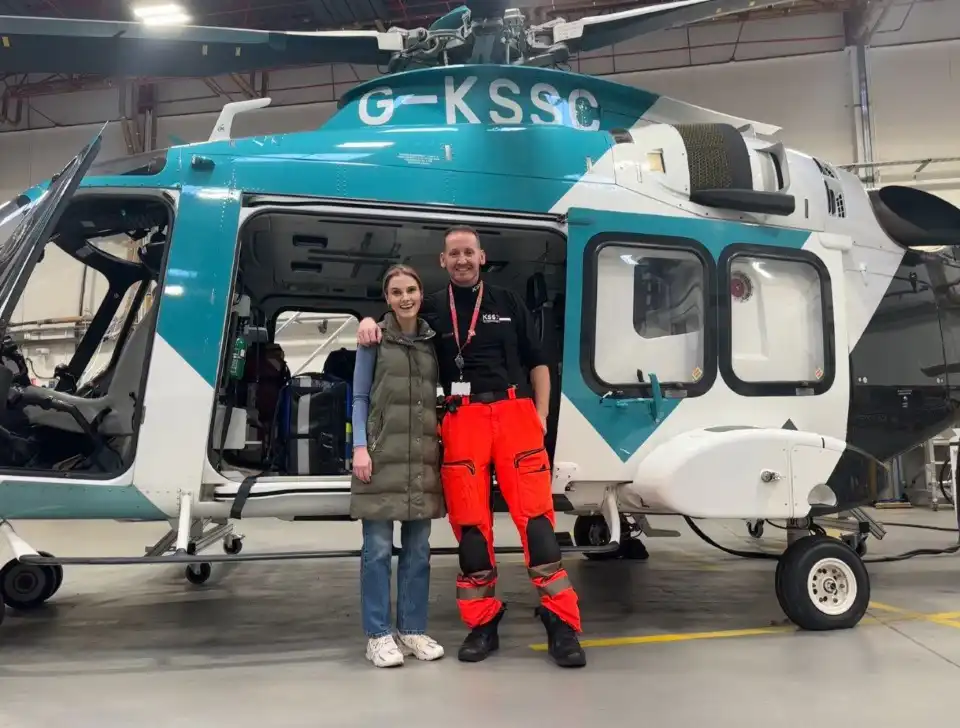
In December 2024, I was invited to Redhill to meet members of the crew that saved my life. It was explained to me that they had to bind my pelvis carefully and package me in a specific way to try to prevent catastrophic bleeding. I didn’t really know what to expect from the visit. I thought I might see the helicopter, but I never imagined I’d get the opportunity to meet the people who helped save my life.
Since my accident, I take each day as it comes, and I don’t sweat the small stuff anymore. I’m so grateful for the little things that people often take for granted. I’m proud that even after everything, I’ve been able to return to work, achieve a master’s degree, and provide better care for my patients in hospital.
If it wasn’t for the treatment and care I received from KSS, I wouldn’t be here today. I wouldn’t have been transferred to St George’s. I wouldn’t have had that operation. And I wouldn’t be living the life I have now.
Craig Prentice
When we arrived on scene, the South East Coast Ambulance (SECAmb) crew had been there for about 20 minutes. Sasha was still deeply entangled in the motorbike, and as we approached, I remember thinking about how we were going to get her legs free. It was a challenging extrication.
Sasha’s was an unusual case because people who come off their motorbikes often injure their head and are profoundly unconscious. However, this wasn’t the case for Sasha, as she was unusually alert.
We needed to gently get her free from the bike with minimal movement because, in situations like this, sharp, sudden movements can worsen the bleeding.
As we attended to Sasha, we held her hand and talked her through everything we were doing to make sure she felt as safe as possible and answered her questions. We always talk to our patients, whether they are conscious or not.
The flight to St George’s was quite straightforward, and I was reassured to see that Sasha’s observations had improved after we prepared her for the flight and had given her blood and plasma.
It was amazing to meet Sasha when she came to our base at Redhill because she has made such a good recovery.
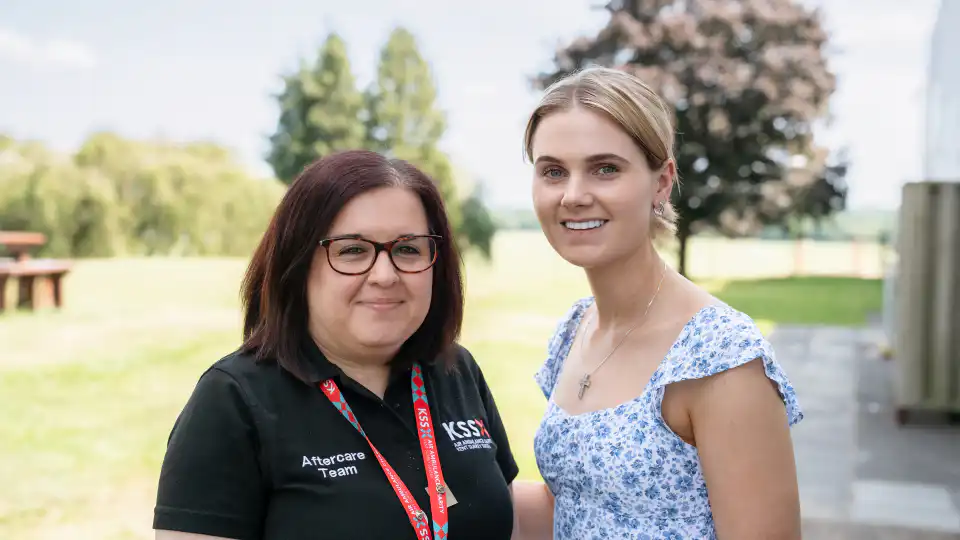
It’s a massive team effort to help our patients, and what’s great at KSS is that, as well as helping them physically, we can offer psychological support through our Aftercare team.